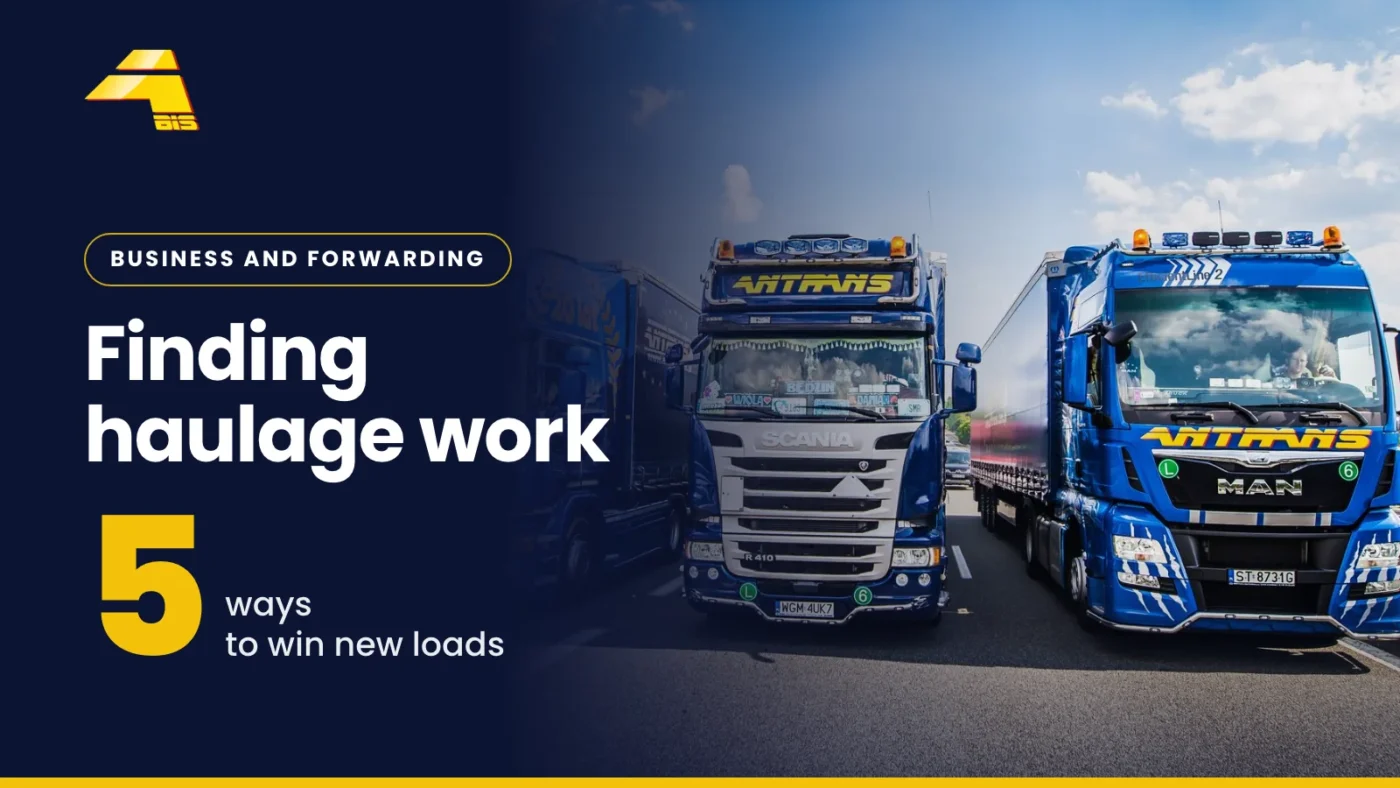
Finding haulage work means constantly searching for and securing loads so that you keep empty running to a minimum and your fleet stays profitable. The market is huge: Statistics Poland (GUS) reports that road transport in Poland alone carried 1,942.8 million tonnes of goods in 2023, almost 2 billion tonnes.
In practice, work falls into one-off, last-minute runs and regular contracts that let you plan driver schedules, servicing and cash flow. In this guide you will find 5 ways to win loads and practical tips on where to look for work for vans and heavy articulated trucks.
What are transport orders and how do they relate to the contract of carriage?
A transport order is the everyday name for an arrangement in which the client (a shipper or a freight forwarder) gives a carrier the terms of carriage and the carrier agrees to perform it. Formally, under Polish law, it rests on a contract of carriage, in which the carrier undertakes, in the course of its business, to transport goods for payment. How a freight forwarder differs from a carrier is explained in a separate article.
In international haulage, the key document is the CMR consignment note. It is evidence that a contract of carriage has been concluded, and its absence does not invalidate the contract itself.
The takeaway is simple: your “order” may come by email or through a platform, but you still need to make sure the contract terms, rates, liability, payment terms and paperwork are consistent and complete.
Why win regular haulage contracts?
Regular haulage contracts usually pay better than grabbing one-off runs from one day to the next, because they cut operational chaos and make your business more predictable. Steady revenue improves liquidity, because you can see sooner how much you will really earn in a month and when your invoices will be paid.
Fewer empty kilometres raise your margin, because empty running usually eats into haulage profits more than the rate per km itself.
Better fleet planning cuts costs, because it is easier to arrange driver rotas, inspections, tyre changes and servicing.
How do you start finding haulage work effectively?
Prepare a concise description of your fleet and capabilities: vehicle types, bodies, permissible weights, equipment and the routes you run most often. Set your operating minimum: the rate below which you won’t take a run, the payment terms you accept and the documents you supply after unloading. Build credibility with complete company details, insurance, procedures for confirming loading and unloading, and clear communication with the dispatcher. Only on that foundation do the five sources of work below really pay off. The biggest mistake at the start is looking for loads without a ready “carrier profile”. A client wants to understand within a minute what you handle and what standards you work to.
5 effective ways to find domestic and international haulage work
1. Working with a freight forwarder that builds regular routes
This is the simplest route to regular work, because the forwarder takes care of finding the load, dealing with the client and part of the operations. You focus on delivery and quality. On the forwarding side, your partner is a dedicated freight forwarder who handles the job from loading to unloading.
One example of a model built on regular routes is the Antrans BiS “Carrier Zone”, where the company offers cooperation on international lanes and operational support.
If you are aiming for a long-term partnership, agree three things straight away: route frequency, how you will be paid and the standard of documents after delivery. This shortens onboarding and reduces disputes.
2. Freight exchanges, used with tactics rather than “refreshing offers”
Freight exchanges work well if you treat them as a sales channel rather than a lottery. The winner is usually the one who responds quickly and has a clear profile. If you are still choosing a platform, see our comparison of freight exchanges by coverage, price and partner vetting.
Trans.eu and TIMOCOM are popular marketplaces for finding loads and free trucks, with tools that help reduce empty running and plan work.
Good practice is to set permanent filters for your routes, confirm availability quickly and build a track record with the same partners instead of chasing the lowest price.
3. Tenders and larger jobs under volume contracts
If you have a stable fleet and can maintain quality, tenders can give you more predictability than a freight exchange. The TED platform publishes public procurement notices across the EU and can be a source of larger contracts, but it takes paperwork, time and persistence in submitting bids.
This channel suits companies that want to build a client portfolio for the long term, not just “close out the week”.
4. Direct sales to local businesses and manufacturers
In the long run this is the cheapest channel, because you avoid commissions and some of the price competition. It works particularly well in regional distribution and regular deliveries.
The simplest approach is a list of 50 companies within 100 km, a short sales message listing 2-3 routes you cover, and a request for the contact details of the person responsible for logistics. After that, punctuality and consistency win the day.
5. Social media and industry events, with a clear goal
Work from social media is real, but you have to choose places where the decision-makers are, rather than just posting at random. In practice, industry groups, referrals and regular, simple posts about available trucks and routes are what work.
If you are targeting B2B contacts, industry events can shorten the path to regular clients. For example, TransLogistica Poland in Warsaw has announced dates of 3-5 November 2026.
Where should you look for loads by tonnage and vehicle type?
The market looks different for small vehicles, vans and full articulated trucks, because the sources of loads, the speed of decisions and the typical risks on the road all differ. In practice, payload and body type decide whether you are better off looking for work locally, on a freight exchange, through a forwarder or in regular contracts with businesses. Below you will find the most effective places to look for 1.5 t, 3.5 t, 9 t and 24 t vehicles.
Transport jobs for vehicles up to 1.5 tonnes
In this weight class, local presence, speed and flexibility matter most. Classified ad sites, local contacts and platforms for smaller shipments and house moves work well. The Polish platform Clicktrans advertises that you can browse jobs and loads without a subscription, which suits small vehicles and vans just starting out in haulage.
Transport jobs for vans up to 3.5 tonnes
In the van segment (tarpaulin, box body, refrigerated), most jobs appear on freight exchanges, because loads turn over quickly, especially in international express. In practice, platforms such as TIMOCOM and Trans.eu are used most often.
Transport jobs for trucks up to 9 tonnes
The middle of the market tends to be less about exchanges and more about contracts. Direct sales to distributors and manufacturers work well, as does working with forwarders that run regional distribution. Reliability and a willingness to work to fixed time windows usually win here.
Transport jobs for trucks up to 24 tonnes
With full articulated trucks (FTL), most work comes through forwarding networks, freight exchanges and long-term client relationships, where volume and punctuality count. If your goal is regular international routes, the fastest way in is to work with a forwarder that has recurring lanes.
Return loads and combining routes
The biggest losses in haulage come from return loads taken “just to get home”, because they are what most often eats up the margin from a good outbound run. Plan the return as carefully as the main job, ideally before you even set off, not once you have unloaded.
- Build two return options for each main lane, one as your target and the other as a fallback, so you are not left without a decision when the market is empty.
- Set a hard minimum for the return: the maximum empty run to the pickup, the minimum rate and the surcharges you will not waive for extra drops and tight time windows.
- Stick to the rule that after unloading you act within a set time window, because the longer you wait, the more often you are left with the worst rate or a job with a high risk of waiting time.
- Collect your own route data, because after a few weeks you can see which sites regularly cause waiting time, slot booking problems and delays, and that lets you cut unprofitable returns without guesswork.
With this process the week closes predictably, and the fleet makes money on its routes rather than on “saving the mileage”.
Domestic or international work: which to choose in 2026?
Domestic jobs usually mean simpler operations and a shorter payment cycle, but you often have to compete harder on rate.
International jobs require better management of documents and of drivers’ driving and rest times, but repeat routes and steady volumes are easier to come by.
If you are just starting out, a sensible set-up is to use domestic work to “fill gaps” in the schedule while building 2-3 regular international lanes that stabilise the month.
FAQ: finding haulage work
The FAQ below covers the questions carriers ask most often about finding haulage work in 2026, both domestic and international. You will find specific answers on where to really look for loads, how to move from one-off runs to regular routes and what to do to improve your chances of long-term cooperation and cut empty running.
What does finding haulage work involve?
It means constantly securing loads so that your truck neither stands idle nor runs empty. In practice, this means combining several sources of work, responding quickly to enquiries and building repeat routes with the same client or forwarder. Repeatability makes the biggest difference to results, because then you plan drivers’ work and servicing instead of firefighting from one day to the next.
What is the difference between a one-off job and a regular contract?
A one-off job saves the week, while a regular contract builds the month. You take one-off jobs when you have a free truck and want to fill your mileage, but you usually end up competing on rate and time. Regular contracts are recurring runs on the same lane or in the same time window, which means less empty running and more predictable revenue.
Why are regular contracts usually more profitable?
Regular contracts reduce empty kilometres and stabilise cash flow. When you know in advance where you are going and when you are coming back, it is easier to find a return load, plan rotas and cut waiting time. You also find it easier to negotiate terms, because the client can see that you deliver quality, not just a price.
How can you get your first loads quickly?
The shortest route is working with a freight forwarder or actively picking up loads on a freight exchange. A forwarder gets you into the market faster, because you get ready-made enquiries and operational support, while an exchange lets you pick up runs on the spot if you react quickly. Either way, one thing is key: a clear carrier profile stating vehicle type, routes, availability and payment terms.
How do you win regular haulage contracts step by step?
Regular contracts are won through consistency and trust, not through one good rate. First you choose 2-3 lanes you can realistically cover without disrupting your schedule, then you deliver on time with full paperwork after unloading, and only then do you ask for regular work and volume. In practice, a regular arrangement starts when the client stops looking for “someone for tomorrow”, because they know you will deliver.
Where is the best place to find regular haulage contracts?
The best channels are those where you can build repeat routes, namely freight forwarders and direct sales to businesses. Freight exchanges are good for filling free slots, but long-term relationships are harder to build there because price pressure is higher. If you want regular routes, target forwarders offering fixed lanes, or manufacturers and distributors with regular shipments.
Do freight exchanges still make sense in 2026?
Yes, but only if you work them like a salesperson, not like someone who just keeps hitting refresh. What pays off is a quick response, permanent filters for your routes and steadily building a track record with the same partners. If you take whatever comes along, you end up with low-margin runs and stressful logistics.
Where can you find private transport jobs without middlemen?
Private jobs are easiest to find locally, where speed and trust count. Regional social media groups, referrals from garages and shops, and classified ad sites all work, because private individuals and small businesses are looking for someone “right now”. In this segment, contact, communication and timing win, and price comes second.
Where can you find work for vans up to 3.5 tonnes?
Most van work comes from freight exchanges and forwarders, because this segment lives on quick turnover. Vans handle express runs and tight time windows, so offers appear every day and often disappear within a quarter of an hour. To make it pay, you need to plan your returns and avoid routes that leave you running empty.
Where can you find work for trucks up to 9 tonnes?
For 9-tonne trucks, long-term cooperation with businesses and regional distribution works best. These loads more often move in repeat cycles, as they are usually regular deliveries to retail chains, warehouses or industrial customers. If you want this kind of work, look for companies in your region and offer specific collection windows and fixed days of the week.
Where can you find work for trucks up to 24 tonnes?
At 24 tonnes, the biggest volume is in FTL work from freight forwarders and large logistics operators. Continuity and punctuality count here, because every delay disrupts the warehouse or production schedule. If you want regular routes, target lanes that repeat weekly and negotiate terms based on volume, not a single run.
Where can you find domestic transport jobs in Poland?
You are most likely to win domestic jobs through freight forwarders, local manufacturers and distributors, and freight exchanges. Domestic work tends to be more price-sensitive, but operations are simpler and payment is often faster. Regular lanes within a single region work best, as you can rotate trucks on short routes.
Where can you find international transport jobs?
International work is easiest to build through freight forwarders with regular routes across Europe. Freight exchanges also work, but on international routes predictability wins sooner, meaning repeat lanes and stable time windows. In practice, regular international contracts come when you consistently deliver on time with the right paperwork and the client does not have to “keep an eye on you”.
What should you prepare to improve your chances of winning a job?
The carrier who clearly states availability, vehicle type and payment terms usually wins. The client wants to know within a minute whether you have the right vehicle, when you can send a truck and how quickly they will get the documents after unloading. The less that is left unsaid at the start, the fewer disputes later and the better your chance of long-term cooperation.
Where can I find international haulage work?
You will find international transport jobs above all with companies such as Antrans BiS, which offer regular routes across Europe. Freight exchanges such as TIMOCOM and Facebook groups are also worth using. These sources give you quick access to loads on international routes and long-term cooperation with freight forwarders.
Win regular haulage work with Antrans BiS
Antrans BiS, based in Olkusz, Poland, is a proven partner for carriers, providing regular loads on international routes and stable cooperation based on partnership.
Our company offers:
- payment for every kilometre driven,
- short payment terms,
- tours of at least 2 weeks,
- the option to hire a semi-trailer,
- 24/7 access to experienced freight forwarders.
Contact: Miłosz, +48 666 666 863, kontakt@antransbis.pl
Go to the Antrans BiS Carrier Zone

Managing Director | Antrans BiS, Olkusz
Sebastian Szklarczyk has led the development of Antrans BiS, a transport company operating throughout Europe, for more than 15 years. He started as Head of the Freight Forwarding Department, gaining practical experience in organising international transport and managing a vehicle fleet on European routes.
As Managing Director, he is responsible for the strategic management of a company handling more than 21,000 transport operations a year on its main routes: Poland-Italy, Poland-Germany, Poland-Austria, Spain, the Benelux countries and Scandinavia. Under his leadership, Antrans BiS has expanded its fleet to 220 vehicles, including its own and partners’ vehicles, and achieved an on-time delivery rate of 98%.
Specialisms: international FTL transport throughout Europe, automotive and FMCG logistics, optimisation of European routes, road traffic regulations and driving bans in the EU, and transport documentation (CMR, VAT-UE, INTRASTAT).
On the Antrans BiS blog, he shares practical knowledge about international freight forwarding, transport regulations and the business aspects of running a transport, freight forwarding and logistics company in different European countries.